
AI-Powered Payments: The Digital Revolution That's Reshaping Financial Security
Visa's groundbreaking AI agent payment systems herald a new era of autonomous transactions. Explore how artificial intelligence is revolutionizing payment security while introducing unprecedented challenges.
Super Admin
Author
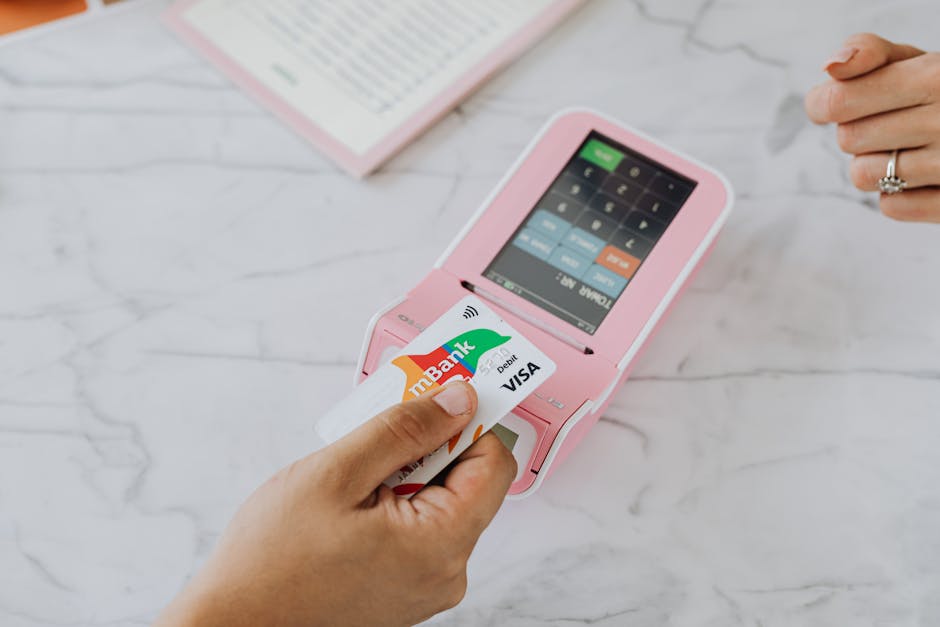
🚀 The Dawn of Autonomous Payment Intelligence
Imagine a world where your AI assistant doesn't just remind you to pay bills—it actually pays them. Where smart contracts execute million-dollar transactions faster than you can blink. Where algorithms negotiate prices, authorize purchases, and manage your entire financial ecosystem without human intervention. This isn't science fiction anymore—it's Visa's bold vision for the future of payments.
As artificial intelligence agents prepare to handle our financial transactions, we're standing at the precipice of the most significant payment revolution since the invention of credit cards. But with great power comes great responsibility—and unprecedented security challenges that will reshape how we think about money, trust, and digital commerce.
🔐 The Security Fortress: AI as Your Digital Guardian
Traditional payment systems are like medieval castles—strong walls, but vulnerable to sophisticated attacks. AI-powered payment security operates more like a living, breathing immune system that adapts, learns, and evolves in real-time.
💪 The Defensive Arsenal
- Real-Time Fraud Detection: AI algorithms analyze thousands of transaction patterns per second, identifying suspicious behavior faster than any human analyst
- Behavioral Biometrics: Machine learning models create unique "digital fingerprints" based on typing patterns, device usage, and transaction habits
- Predictive Risk Assessment: Advanced algorithms predict potential fraud before it happens, not after
- Dynamic Authentication: AI adjusts security requirements based on risk levels—seamless for low-risk transactions, fortress-like for suspicious ones
- Network Effect Protection: AI systems share threat intelligence across the entire payment network, creating collective immunity
🎯 Precision Strike Capabilities
Modern AI payment systems don't just react—they anticipate. Like a chess grandmaster thinking ten moves ahead, these systems analyze:
- Geographic anomalies in spending patterns
- Time-based transaction irregularities
- Device fingerprint inconsistencies
- Merchant risk profiles and reputation scores
- Cross-platform behavioral correlation
⚡ The Lightning-Fast Transaction Highway
Speed isn't just convenience—it's security. The faster legitimate transactions process, the smaller the window for fraudulent interference. AI-powered payment systems are rewriting the rules of transaction velocity.
🏎️ Speed Advantages
- Millisecond Decision Making: AI processes payment authorization in under 100 milliseconds
- Intelligent Routing: Algorithms automatically select the fastest, most secure payment pathways
- Predictive Pre-Authorization: AI pre-approves likely transactions before users even initiate them
- Dynamic Load Balancing: Smart systems distribute transaction loads to prevent bottlenecks
- Blockchain Integration: AI optimizes blockchain transaction speeds while maintaining security
⚠️ The Dark Side: When AI Becomes the Threat
But here's the plot twist—AI isn't just defending the castle; it's also being weaponized by the attackers. The same technology protecting your transactions can be turned against you with devastating precision.
🎭 The New Breed of Digital Criminals
"Today's cybercriminals aren't just using AI as a tool—they're creating AI that thinks, adapts, and attacks like a digital predator." - Leading cybersecurity expert
🔴 AI-Powered Attack Vectors
- Deepfake Authentication: AI-generated biometric spoofing that can fool traditional security systems
- Adaptive Malware: Self-modifying code that learns from security responses and evolves
- Behavioral Mimicry: AI that studies user patterns and perfectly replicates legitimate behavior
- Coordinated Bot Swarms: Distributed AI agents launching synchronized attacks across multiple platforms
- Social Engineering 2.0: AI-powered phishing that personalizes attacks with frightening accuracy
🛡️ The Great Security Paradox
Here's where things get fascinating—and terrifying. We're essentially in an AI arms race, where the same technology that protects us can also destroy us. It's like having a guard dog that might turn into a wolf.
⚖️ The Balance of Power
Consider these contrasting realities:
- Protection vs. Vulnerability: AI makes systems incredibly secure against traditional attacks while opening new vectors for AI-based threats
- Speed vs. Oversight: Lightning-fast AI decisions reduce fraud windows but also minimize human oversight opportunities
- Personalization vs. Privacy: More personalized security requires more data collection, creating larger privacy risks
- Automation vs. Control: Automated systems handle threats faster but give users less direct control
- Intelligence vs. Transparency: More sophisticated AI systems become harder for users to understand and trust
🌈 The Spectrum of AI Payment Security
Not all AI payment systems are created equal. They exist on a spectrum from basic automation to full artificial general intelligence, each with distinct security implications.
🟢 Level 1: Rule-Based Automation
- Basic if-then logic
- Predictable behavior patterns
- Limited adaptability
- Security Profile: Reliable but vulnerable to sophisticated attacks
🟡 Level 2: Machine Learning Integration
- Pattern recognition capabilities
- Statistical anomaly detection
- Continuous learning from data
- Security Profile: Strong against known threats, developing resistance to new ones
🟠 Level 3: Advanced AI Agents
- Complex decision-making trees
- Multi-factor risk assessment
- Adaptive response mechanisms
- Security Profile: Highly effective but requires careful monitoring
🔴 Level 4: Autonomous AI Systems
- Independent decision authority
- Self-improving algorithms
- Minimal human oversight
- Security Profile: Maximum protection potential with maximum risk uncertainty
🎯 Real-World Battle Stories
The AI payment security battlefield isn't theoretical—it's happening right now, with billions of dollars at stake.
🏆 Victory Stories
- JPMorgan Chase: AI systems blocked $1 billion in fraudulent transactions in 2023
- PayPal: Machine learning reduced false positive fraud flags by 50%
- Mastercard: AI-powered Decision Intelligence prevents $20 billion in fraud annually
💥 Cautionary Tales
- Algorithm Bias: AI systems flagging legitimate transactions from minority communities at higher rates
- Flash Crashes: Automated trading systems causing market instability
- Privacy Breaches: AI systems inadvertently exposing user behavior patterns
🔮 The Future Landscape: 2024 and Beyond
As we hurtle toward an AI-dominated payment future, several trends are reshaping the security landscape:
🌟 Emerging Technologies
- Quantum-Resistant Encryption: Preparing for quantum computing threats
- Federated Learning: AI that learns without centralizing sensitive data
- Homomorphic Encryption: Processing encrypted data without decryption
- Zero-Knowledge Proofs: Verification without information disclosure
- Blockchain-AI Hybrids: Combining distributed trust with intelligent automation
🎪 The Regulatory Circus
Governments worldwide are scrambling to create regulations for AI payment systems, but technology is moving faster than policy. Key regulatory battlegrounds include:
- Algorithmic transparency requirements
- AI decision-making liability frameworks
- Cross-border AI payment standards
- Consumer protection in automated systems
- Data sovereignty in global AI networks
🎨 Painting the Future of Secure Payments
Imagine a world where your AI payment assistant knows you better than you know yourself. It recognizes your coffee order at 7:43 AM is legitimate, but flags a 3 AM luxury purchase as suspicious. It seamlessly handles your monthly bills while alerting you to unusual subscription charges. It negotiates better rates with vendors and automatically applies discount codes you forgot existed.
This isn't just about technology—it's about trust. We're not just building payment systems; we're architecting the foundation of digital commerce for the next century.
🎯 Conclusion: Navigating the AI Payment Revolution
The integration of AI into payment systems represents both our greatest opportunity and our most significant challenge. Like Visa's bold move into AI agent transactions, we're witnessing the birth of a new financial ecosystem that promises unprecedented security, speed, and intelligence.
The bright side: AI-powered payments offer real-time fraud detection, personalized security, lightning-fast transactions, and adaptive protection that evolves with emerging threats. These systems can prevent billions in fraud while making legitimate transactions smoother than ever.
The shadow side: We're also enabling new attack vectors, creating algorithmic dependencies, and potentially sacrificing transparency for efficiency. The same AI that protects us can be weaponized against us.
The question isn't whether AI will transform payments—it already has. The question is whether we can harness its power responsibly while staying ahead of those who would abuse it. As we stand on the threshold of this brave new world, one thing is certain: the future of payments will be defined not just by artificial intelligence, but by how intelligently we implement it.
The digital payment revolution is here. Are you ready to embrace both its promise and its perils?
Tags
Written by
Super Admin
Author at BuildMyAiStoreNow
Related Articles

How AI Became the Future of Tech in 2026: The Year Everything Changed
From Claude's coding revolution to AI-powered e-commerce stores, 2026 became the pivotal year when artificial intelligence transformed from a promising technolo...
Mar 12, 2026
AI Agents Reshape Job Market: What College Graduates Need to Know in 2026
Software AI agents are transforming the employment landscape for new graduates. Discover how artificial intelligence is changing career prospects and what skill...
Mar 15, 2026
Comments (0)
No comments yet. Be the first to share your thoughts!
Protected by reCAPTCHA. Privacy & Terms.